Personal Reflection on Organizing Djangonaut Space Session 5
This blog is a short reflection on what it was like to help organize Djangonaut Space Session 5. It’s a small journal-style look at how the session unfolded behind the scenes and what it taught me along the way.
Every session of Djangonaut Space teaches me something new, but Session 5 felt especially personal. Maybe because the initial preparation felt easier (at least in my head) after doing it twice before. Maybe because life kept shifting around availability or as I like to say the classic “five-people-across-the-globe” logistics. Maybe because I fumbled more than expected. Or maybe because this program has a quiet, graceful way of reminding you why you show up, even on the days when energy is low or calendars refuse to cooperate.
Whatever the reason, this isn’t a polished victory post.
It reads more like a field note or the kind of journal entry.
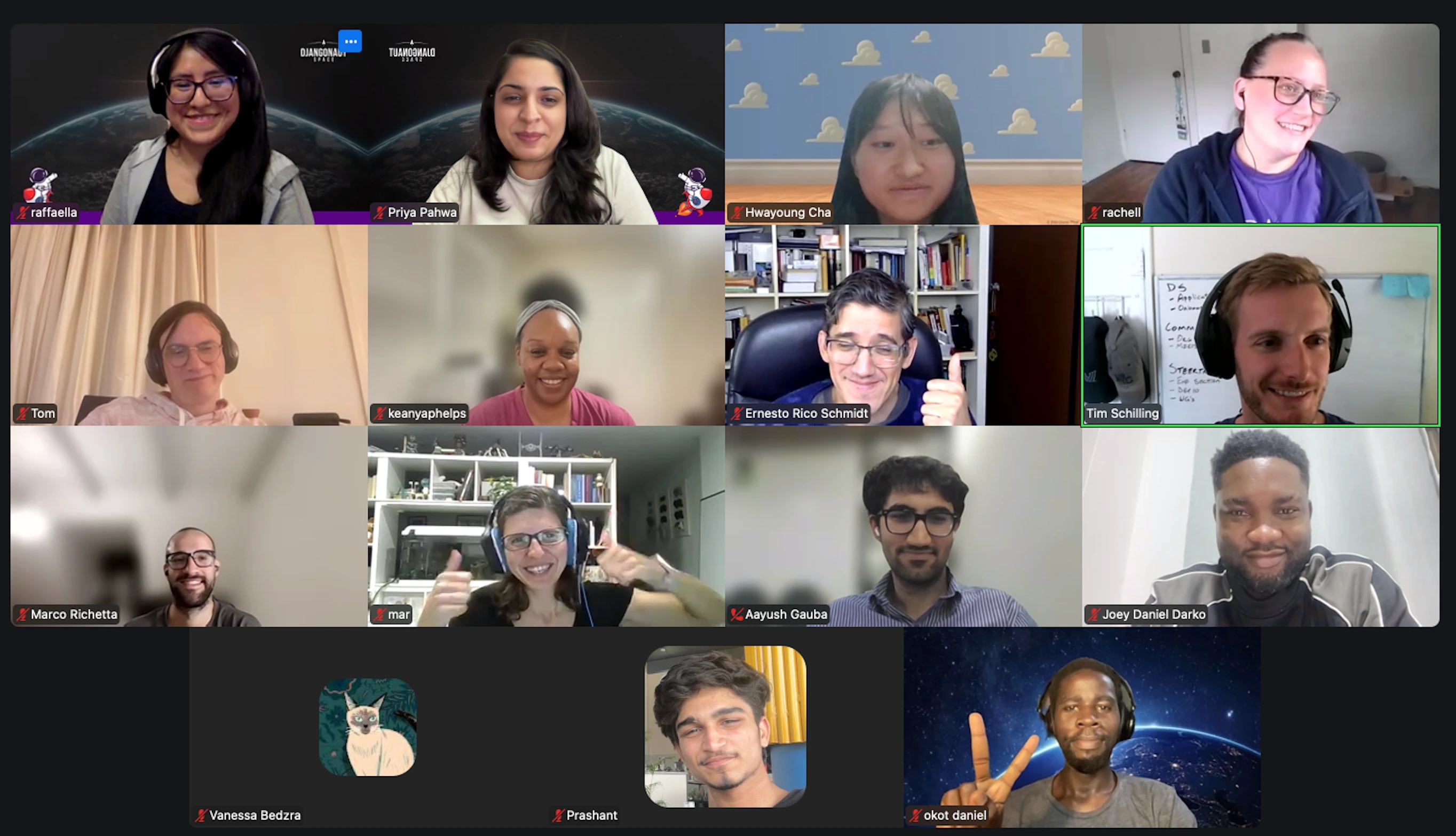 Djangonaut Space Session 5 Onboarding Meeting
The Session 5 Timeline
This session brought together an inspiring mix of teams: two Django core teams and one team each for djangoCMS, Wagtail, Django Packages, and Django Debug Toolbar.
- 29 July 2025 - Organizers’ Kickoff
- 29 September 2025 - Program Starts
- 23 November 2025 - Program Ends
Full Blog @ 2025 Opening Session 5
Full Blog @ Djangonaut Space Session 5 Team Introduction
The Ritual That Brings Me Back
People often assume organizers return because they’re “good at running programs.”
But the real reason is simpler: those early planning calls where the room fills with perspectives from people who genuinely care about making learning safer, kinder, and more welcoming. That intentionality is grounding. It’s rare. And it’s why I keep returning.
The pre-session phase carries most of the invisible work: drafting communications, structuring the schedule, reviewing previous sessions, evaluating submissions, sorting availability, and deciding what needs improvement.
Marketing & Applications
The beginning is mostly signal-boosting, updating the website, coordinating forms, sharing on socials, and keeping track of early questions. This quiet logistical work shapes the session more than it seems.
Recruiting Navigators & Captains
Officer onboarding isn’t just about responsibilities. It’s about:
- establishing expectations
- setting communication norms
- reinforcing the culture of empathy and patience
This phase sets the tone for everything that follows.
Reviewing Applications & Forming Teams
This part is always deeply intentional. We review tutorials, motivations, time zones, and learning goals. We try to create teams that feel balanced both technically and interpersonally.
By Week -1, the sheets are filled, the forms are closed, and the inbox has its classic send-confirm-wait rhythm. And then comes the moment of: “Okay. The program is actually happening.”
Teams start meeting, captains run their 1:1s, navigators begin check-ins, and Discord slowly comes alive.
Organizers keep nudging in the background:
- “Is everyone in the right channel?”
- “Has every team started meetings?”
- “Any early blockers?”
Those early weeks are where confidence quietly forms.
My Role This Session
For Session 5, I supported communications around the presentations and related areas:
- Onboarding Meetings
- Guest Speaker Talks
- Djangonaut Space Showcase
- Closing Celebrations
Onboarding Meetings
Onboarding calls always remind me how differently people absorb information.
We cover what the next eight weeks will look like, who are the crew mates, how to best utilize the workbooks, how to ask for help (early!), how to use communication channels, where to find resources, why consistency matters more than speed, and ofcourse get to know each other.
Although, we walk through the same slides, yet everyone interprets them in their own way, some see structure, some see opportunity, some see reassurance. That variety of perspective is what makes the program dynamic right from the start.
Guest Speaker Talks
We hosted two fantastic technical talks this session:
-
“Django, what the JOIN” by Simon Charette: YouTube Link
-
“Django’s Triage & Review Team” by David Smith: YouTube Link
Both sessions gave participants a deeper understanding of Django internals and the contributor workflow.
The Showcase: My Favourite Moment
Djangonaut Space Showcase is our mini cosmic conference of lightning talks. People shared what they contributed, what they learned, what surprised them, and where they grew.
We celebrated PRs merged, issues explored, tests written, docs improved, and conversations that built clarity. But just as importantly, we celebrated the human side of the program: confidence gained, connections formed, the courage to admit confusion, and the consistency of showing up despite everything else happening in life.
Watch Djangonaut Space Showcase on YouTube
And yes, I did say “8 years” instead of “8 weeks” by mistake during the intro. This is now canon. (Manifesting 🤞🏻)
Closing Celebrations
We wrapped Session 5 with a celebration call. We looked back at the session number’s which weren’t just achievements; they were snapshots of effort, late-night debugging, persistence, and teamwork.
Session 5 Stats:
- 31 PRs Opened and 18 Merged
- 2 Pair Programming Sessions
- 3 Blog posts sharing their experience at Djangonaut Space
- 1 Django blog post: Five ways to discover Django Packages
- 1 “Updates to Django” in Django News
- 3 Djangonauts contributed to the new version of Django Debug Toolbar
-
… and many other wins
Checkout End-of-Session Debrief @ Djangonaut Space Celebrating Session 5 Achievements
We ended with trivia, laughter, virtual photographs, and heartfelt closing notes.
During Session 5, I also had the chance to attend Django Day India, meet folks from the community in person, and present a talk on Organizing Djangonaut Space: A Toolkit for Inclusive Events. The experience was amazing.
What Success Really Looks Like (to me)
In technical spaces, success is often measured by commits, PRs, completed issues, and feature progress.
But in a program like Djangonaut Space, success has layers:
- Yes, structure and planning matter.
- Yes, well-run meetings and clean contributor pathways matter.
- Yes, number of contributions and sustainability matters.
But beyond the technical, success also looks like:
- Participants helping each other debug, even as strangers
- Navigators supporting multiple learning styles
- Teams celebrating small wins that don’t show up in metrics
- Volunteers stepping in when someone’s availability shifts
- People building confidence, not just code
There are a million ways success shows up. We just have to notice patterns in the culture we have formed.
Sessions Don’t End; They Transition
Session 5 wasn’t perfect, and it didn’t have to be. The lessons, the code, the conversations: they ripple outward.
Some Djangonauts will return as mentors or organizers.
Some will continue contributing to Django or related packages.
Some will take this experience into their workplaces or future communities.
Hopefully, it was collaborative, adaptive, and full of learning for everyone involved!
Here’s to Session 5 —
- the navigators and captains who led with care
- the djangonauts who showed up with courage
- the organizers who carried the behind-the-scenes load
- the community that keeps this space steady
and to everything we carry forward into the next orbit. 💜